
ISO 10993-1:2025 Has Officially Been Published: The Transformation of Medical Device Biological Evaluation Has Reached Brazil
The sixth edition of ISO 10993-1, the leading standard for medical device biological evaluation, was published in November 2025 and fundamentally changes how biological safety is assessed.
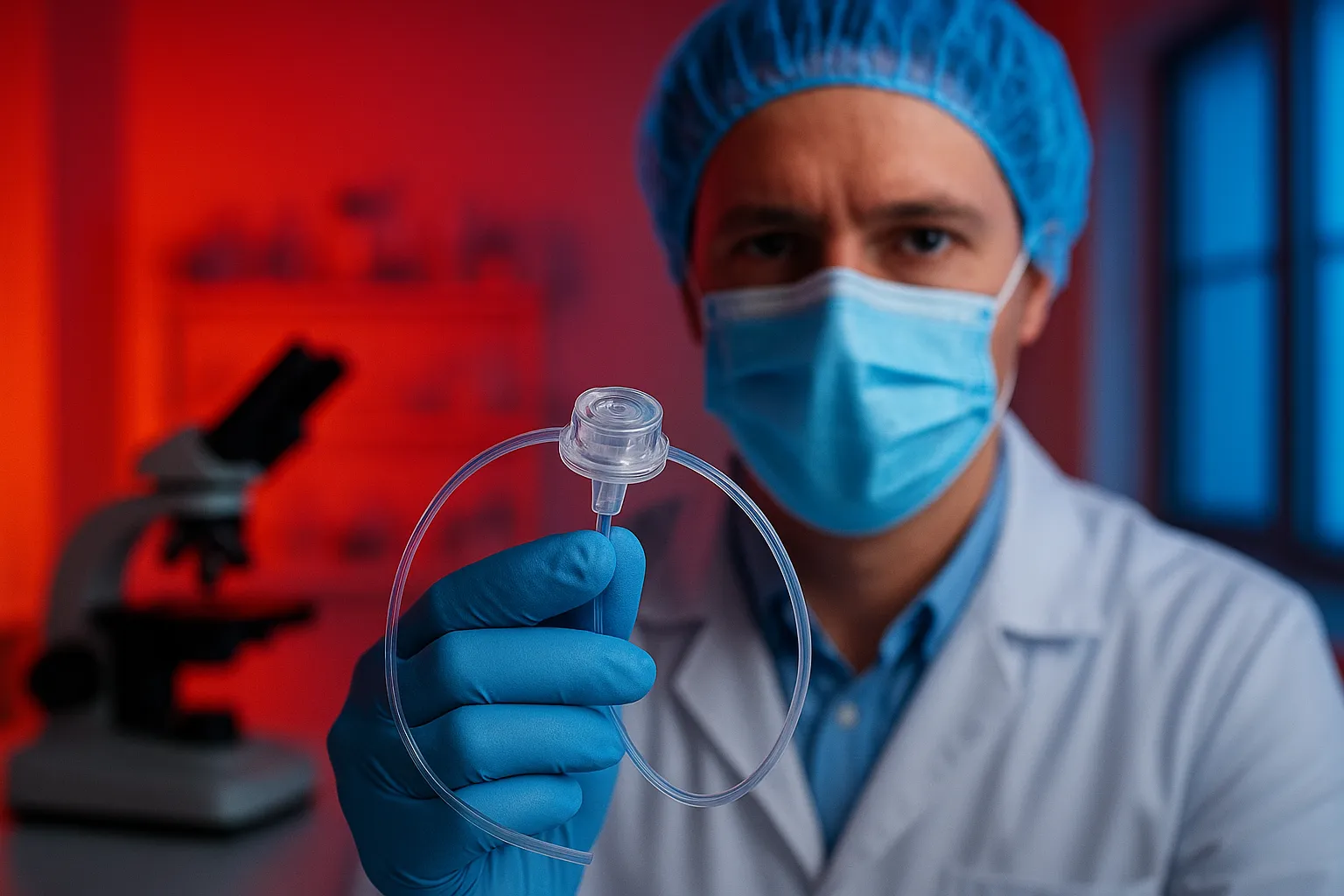
18 November 2025. This date will go down in medical device regulatory history. Today, the International Organization for Standardization (ISO) officially published the sixth edition of ISO 10993-1, the world's most significant and influential standard for assessing the biological safety of medical devices.
If you work in medical device manufacturing, importation, distribution, regulatory consultancy or auditing in Brazil, this is the time to stop and pay attention. What has changed goes beyond technical detail: it fundamentally changes the philosophy behind assessing whether a device is safe for use in the human body.
The question you need to answer today is: is your company prepared for this new regulatory reality?
Why ISO 10993-1 Is the Sector's Most Critical Standard
Before examining the changes, we need to understand their scale. ISO 10993-1 is more than another technical standard on the shelf: it is the cornerstone of the global medical device regulatory system.
In Brazil, ANVISA adopts the ISO 10993 series as a mandatory reference through RDC 848/2024, which establishes essential safety and performance requirements for medical devices and in vitro diagnostic medical devices (IVDs). Without ISO 10993-1 compliance, a manufacturer simply cannot register a medical device that contacts the human body, from a basic surgical mask to an implantable cardiac pacemaker.
Globally, this standard is recognised by the FDA (United States), the European Union (MDR 2017/745), Health Canada, PMDA (Japan), TGA (Australia) and practically every major regulatory agency. Mastering ISO 10993-1 is therefore a requirement for survival in the market.
The standard defines the principles and requirements for assessing medical device biocompatibility within a structured risk management process. It answers the fundamental question: "Is this device safe to contact the human body, considering its materials, design, contact duration and intended use?"
The previous version (ISO 10993-1:2018) already marked significant progress by establishing that biological evaluation is a complex scientific process requiring careful assessment of chemical, toxicological, clinical and exposure data, rather than a simple laboratory testing checklist. The 2025 edition takes this concept to an entirely new, and much more demanding, level.
The 7 Structural Changes Transforming ISO 10993-1:2025
1. Comprehensive Integration with ISO 14971
The most profound change is full integration with ISO 14971, the international standard for medical device risk management. ISO 10993-1:2025 has been completely reorganised, from 7 to 10 sections, to mirror ISO 14971's structure and workflow.
Biological evaluation is no longer a parallel or isolated process. It is explicitly presented as the biological extension of the device's overall risk management process. Core ISO 14971 concepts such as "hazard", "hazardous situation", "harm", "risk" and "risk control" now appear in ISO 10993-1 with the prefix "biological".
In practice, this means:
- Biological evaluation must follow the device's entire lifecycle, from concept and design to post-market surveillance
- All risk management documents need to integrate the biological dimension
- Traceability and justification for every decision are mandatory at every stage
- Professionals conducting biological evaluations need in-depth knowledge of risk management under ISO 14971
Challenge: many companies outsourcing biological evaluations or treating biocompatibility as a separate process will need to restructure their workflows completely.
2. Biological Risk Estimation Becomes Mandatory
For the first time in the standard's history, biological risk estimation becomes a formal requirement rather than recommended good practice. New clauses 6.9 and 7 establish that manufacturers must estimate biological risk quantitatively or qualitatively, considering two factors:
- Severity of potential biological harm: how serious the adverse effect would be if it occurred
- Probability of occurrence: the actual likelihood of that harm, considering exposure, concentration, route of administration and population
This estimation must take place before deciding which tests to conduct, rather than afterwards. Tests should specifically address knowledge gaps identified through risk estimation, rather than being performed simply because an old table required them.
In practice, this means:
- Biological Evaluation Plans must document the risk estimation methodology used
- Reports must explicitly present risk estimates and their justifications
- Biological risk acceptability criteria must be defined in advance
- Companies will need professionals knowledgeable in toxicological risk assessment (ISO 10993-17)
Practical example: a temporary catheter used for 3 days can no longer simply follow the "standard testing matrix". Actual patient exposure to the material's chemical constituents must be estimated, assessed against established toxicological thresholds, and only then used to determine whether further testing is necessary.
3. New Device Categorisation in Four Specific Tables
The familiar "Table A.1" in the 2018 version has been replaced by four separate tables, each dedicated to a specific type of body contact:
| Table | Type of body contact |
|---|---|
| Table 1 | Devices contacting external surfaces (intact skin, mucosal membranes) |
| Table 2 | Devices contacting compromised surfaces or internal tissues |
| Table 3 | Devices contacting circulating blood |
| Table 4 | Implantable devices |
Contact duration classification has also been refined and must now consider cumulative exposure duration, rather than only the duration of a single use.
In practice, this means:
- Reusable devices must add up total contact time across multiple uses
- Dressings used on alternate days over a month of treatment have a cumulative duration of 15 days if contact occurs for 15 days during that period, rather than 30
- Categorisation is more precise, but also more complex and open to interpretation
Impact: products previously classified as having "limited contact" may now fall under "prolonged contact" when cumulative use is considered, significantly changing evaluation requirements.
4. Reasonably Foreseeable Misuse Enters the Equation
Following ISO 14971's logic, the standard now explicitly requires biological evaluation to consider both intended use and reasonably foreseeable misuse.
This represents a significant philosophical change. Previously, many manufacturers used instructions for use (IFUs) as a form of "risk control", for example specifying a 24-hour use limit to avoid long-term testing. This strategy is no longer acceptable.
In practice:
- If a device designed for single use can technically be reused, even contrary to its instructions, reuse risks must be assessed
- If a temporary device may remain in contact with the patient longer than recommended, that possibility must be considered
- Post-market surveillance analyses and reports of incorrect use become significant sources of information for biological evaluation
Practical example: a chest drain designed for use for up to 7 days. If remaining in place for 10-14 days is common in some patients, biological evaluation must consider this actual scenario, rather than only the "ideal" scenario in the IFU.
5. The Device's Full Lifecycle Takes Centre Stage
The 2025 version dedicates an entire section to considering the medical device's full lifecycle, extending well beyond clinical use:
- Raw materials: quality, medical grade, suppliers and certificates of conformity
- Manufacturing: processes that may alter chemical properties (moulding, welding, machining)
- Sterilisation: ethylene oxide residues, radiation and steam
- Packaging: migration of substances from packaging to the device
- Transport and storage: temperature, humidity and light exposure conditions that may degrade materials
- Clinical use: exposure to body fluids, mechanical loading and wear
- End of life: for resorbable or degradable devices, degradation products over time
In practice, stability studies and accelerated ageing tests become critically relevant. For implants, material degradation inside the body over years needs to be modelled (ISO 10993-9, -13, -14, -15). Reprocessable devices require analysis of degradation across multiple cleaning/sterilisation cycles.
Practical example: a silicone catheter stored for 18 months in a tropical climate may undergo changes in its additives and plasticisers. The standard now requires this scenario to be considered in biological safety evaluation.
6. Emphasis on Alternative Methods and Animal Welfare
Aligned with the 3Rs (Reduction, Refinement, Replacement), the standard reinforces the need to prioritise alternatives to animal testing wherever possible.
The priority order is now clear:
- Chemical and physical characterisation of the device and its materials (ISO 10993-18, -19)
- Toxicological assessment based on published data about the chemicals identified (ISO 10993-17)
- In vitro testing (cytotoxicity, genotoxicity, etc.)
- In vivo animal testing, only when absolutely necessary and properly justified
In practice:
- Companies still taking a "test-first" approach will need to reverse their logic
- Investment in robust chemical characterisation (chromatography, spectroscopy and elemental analysis) becomes a priority
- Laboratories specialising in validated alternative methods gain strategic significance
- Animal ethics committees will require much more rigorous justification
Brazilian context: ANVISA accepts alternative methods recognised by CONCEA (Brazil's National Council for the Control of Animal Experimentation), provided they are validated and appropriate to the evaluation scope.
7. Personnel Qualification Becomes an Explicit Requirement
The standard is unequivocal: biological evaluations must be planned, conducted and reported by competent personnel. This is a formal requirement, rather than a suggestion.
Professionals responsible for biological evaluations must demonstrate:
- Academic qualifications in relevant fields (toxicology, pharmacology, chemistry, biology or biomedical engineering)
- In-depth knowledge of the ISO 10993 series, ISO 14971 and ISO 13485
- Practical experience evaluating similar medical devices
- Scientific judgement enabling informed decisions based on evidence
In practice:
- Biological Evaluation Reports must include the responsible professional's qualifications
- Regulatory auditors (ANVISA and notified bodies) will systematically check credentials
- Companies will need to invest in ongoing training or engage specialist consultants
- Certified toxicologists (DABT, ERT or equivalent) gain a leading role
Significant warning: the standard warns that professionals "conflicted by the need to promote testing" should not conduct evaluations. This raises questions about laboratories that both sell testing and perform evaluations.
What This Means for the Brazilian Market
Publication has direct and urgent implications for everyone in Brazil's medical device chain.
For Brazilian Manufacturers
Immediate challenges:
- Complete review of technical dossiers for products already registered with ANVISA
- Updating Biological Evaluation Plans and Reports to include risk estimation
- Adapting new product development processes
- Integrating risk management and biological evaluation teams
- Training technical teams in the new methodology
Opportunities:
- Companies adapting quickly gain a competitive advantage
- More robust processes mean less regulatory rework
- Better scientific understanding of products reduces post-market surveillance risks
- Potential to reduce unnecessary testing through sound toxicological assessment
Priority actions:
- Conduct a gap analysis comparing current documentation with the new requirements
- Identify products needing priority reassessment (higher risk, greater volume, upcoming renewals)
- Establish partnerships with qualified toxicologists
- Invest in materials chemical characterisation
- Review and update internal procedures and work instructions
For Importers and Distributors
Immediate challenges:
- Ensuring international suppliers know about the update
- Checking whether received technical documentation meets the new standard
- Potential registration/renewal delays during the transition
- The need for more detailed technical dialogue with manufacturers
Priority actions:
- Formally notify all suppliers of the standard's publication
- Request adaptation plans from represented manufacturers
- Prioritise registration renewals according to adaptation status
- Establish direct technical communication with manufacturers' regulatory departments
- Consider specialist consultancy support for preliminary documentation assessment
For Laboratories and Regulatory Consultants
Immediate challenges:
- Urgent technical team training in the new concepts
- Updating testing and evaluation protocols
- Reviewing contracts and service scopes
- Demonstrating professionals' formal qualifications
Opportunities:
- Expanded services: risk estimation, toxicological assessment and chemical characterisation
- Differentiation through technical excellence and compliance with the new standard
- Increased demand for specialist services during the transition
- Opportunities to provide industry training and workshops
For Hospitals and Purchasing Departments
Medium-term impacts:
- Products with more robust, traceable documentation
- Greater confidence in tender technical specifications
- The ability to require compliance with the updated version as a qualification criterion
- Better understanding of the biological risks of purchased products
Adapting in Practice: an Implementation Roadmap
The transition will not happen overnight. Here is a practical 5-phase roadmap:
| Phase | Duration | Focus |
|---|---|---|
| Phase 1 | 1-2 months | Assessment and Planning |
| Phase 2 | 2-3 months | Training and Structuring |
| Phase 3 | 3-6 months | Reassessment of Existing Products |
| Phase 4 | Ongoing | Adapting New Development |
| Phase 5 | Permanent | Maintenance and Continuous Improvement |
Phase 1: Assessment and Planning (1-2 months)
Objective: understand the current situation and define an adaptation strategy.
Activities:
- Establish a multidisciplinary team (risk management, quality, regulatory affairs, R&D and toxicology)
- Conduct a detailed gap analysis comparing existing documentation with new requirements
- Prioritise products through a risk matrix (ANVISA class, volume, renewal proximity and complexity)
- Define a realistic timetable for progressive adaptation
- Estimate required resources (financial, human, time and infrastructure)
Deliverables: gap analysis report, prioritisation matrix, adaptation timetable and budget.
Phase 2: Training and Structuring (2-3 months)
Objective: prepare the organisation with appropriate knowledge and tools.
Activities:
- In-depth training in ISO 10993-1:2025, biological risk estimation, ISO 10993-17 and ISO 14971
- Update internal procedures (Biological Evaluation Plan and Report templates, decision flowcharts)
- Establish strategic partnerships (certified toxicologist, chemical characterisation laboratory and biological testing laboratory using validated alternative methods)
- Implement supporting tools (toxicological databases and a document management system)
Deliverables: trained teams, updated procedures, formalised partnerships and implemented tools.
Phase 3: Reassessment of Existing Products (3-6 months)
Objective: update documentation for products already on the market.
Activities for each product:
- Collect supplementary information (post-market surveillance, raw material certificates, supplier data and stability studies)
- Estimate biological risk (identify hazards, define situations, estimate severity and probability)
- Assess the need for further data (supplementary chemical characterisation only where a gap is identified)
- Update documentation (revise the report, integrate with risk management and ensure sign-off by a qualified professional)
- Independent technical review (recommended)
Phase 4: Adapting New Development (ongoing)
Objective: implement an integrated process from the start of development.
Activities:
- Integrated planning from concept stage, designing with biological safety in mind
- Early chemical characterisation (complete supplier data and extractables/leachables testing on prototypes)
- Iterative risk estimation (initially during design, refined with prototypes and finalised with the finished product)
- Data-led decisions (biological testing only where scientifically justified)
- Verification and validation (technical review before regulatory submission)
Phase 5: Maintenance and Continuous Improvement (permanent)
Objective: ensure ongoing compliance and evolving practice.
Activities:
- Post-market surveillance integrated with biological evaluation
- Regular internal audits (compliance, professional qualifications and procedural effectiveness)
- Ongoing technical updates (revisions to other ISO 10993 standards, conferences and scientific literature)
- Change management (impact assessment whenever suppliers, processes or materials change)
Realistic Timelines and Regulatory Expectations
Expectations about timing must be realistic:
- ANVISA adoption: the process may take 6 to 18 months after publication. Even before formal adoption, however, ANVISA may begin expecting compliance with the latest version in new registrations.
- Products already on the market: the standard does not automatically require retesting approved devices. However, documentation will need to meet the current version when registrations are renewed or significant changes are made.
- New products: for development beginning after today, following ISO 10993-1:2025 from the outset is strongly recommended, even if ANVISA has not yet formally adopted it. This avoids future rework.
Suggested timetable:
- Today to 3 months: Assessment and planning
- 3 to 6 months: Training and structuring
- 6 to 12 months: Reassessment of priority products
- 12 to 24 months: Full portfolio adaptation
- Ongoing: Maintenance and compliant new development
Challenges and Controversies
Publication of ISO 10993-1:2025 has not been universally welcomed. Legitimate concerns are being discussed:
- No application guide. Unlike ISO 14971, which has ISO 24971 as its guide, ISO 10993-1:2025 has no explanatory companion document. This may lead to divergent interpretations, particularly around biological risk estimation.
- FDA resistance. The US FDA and AAMI (Association for the Advancement of Medical Instrumentation) voted against approving the standard, arguing that it introduces change too quickly. This creates uncertainty about when, or whether, the FDA will adopt the 2025 version.
- Greater complexity. Small manufacturers and companies in developing countries have expressed concerns about increased complexity and compliance costs. Market concentration favouring larger companies is a risk.
- Interpreting "reasonably foreseeable misuse". Exactly what constitutes reasonably foreseeable misuse is open to interpretation and may cause disputes between manufacturers and regulators.
- Professional qualifications. What constitutes "appropriate" qualification to conduct biological evaluations? Is certified toxicology training mandatory, or is practical experience sufficient? Different markets may interpret this differently.
The Window of Opportunity Is Open
Publication of ISO 10993-1:2025 marks a turning point in the medical device industry. It is a fundamental reshaping of how we think about medical device biological safety, rather than a simple incremental update.
For manufacturers and importers, this is a strategic decision point: lead the change or react under pressure when ANVISA makes compliance mandatory? Companies acting proactively gain:
- A competitive advantage in the market
- Stronger relationships with regulators
- More robust and efficient internal processes
- Reduced commercial and reputational risks
- A better scientific understanding of their own products
For regulatory and quality professionals, this is an unprecedented career development opportunity. Demand for specialists mastering the new standard will be enormous over the next 2-3 years.
The question is not "whether" your organisation will need to adapt, but "when" and "how well prepared it will be when the time comes". Companies starting today will already be ahead. Those waiting to see what happens risk finding themselves in an emergency when ANVISA formalises adoption.
The time to act is now. Tomorrow's compliance begins with today's decisions.
Register now and stay informed of all the latest developments.
More quality to explore
Each article connects regulatory changes to what they mean for your day-to-day work.
 Quality
A special process is not audit jargon - it is the factory's most misunderstood risk category
If your process output cannot be verified by inspecting the finished product, you are dealing with a special process - where failure does not show up in the component, but in the patient.
 Quality
Your sterilisation cycle is validated. But did you validate the right product under the right worst-case conditions?
An approved cycle shows that the equipment delivers the process - not that the most challenging device, in the most demanding load, achieves the required SAL. This confusion is one of the sector's costliest gaps.
 Quality
Packaging does more than protect the product. It maintains sterility - and that takes different engineering
Physically protecting a product and maintaining a sterile barrier throughout its shelf life are distinct objectives requiring distinct validations. Sterility only reaches the patient if the packaging preserves it.
Comments
No comments yet. Be the first to comment.