
Your sterilisation cycle is validated. But did you validate the right product under the right worst-case conditions?
An approved cycle shows that the equipment delivers the process - not that the most challenging device, in the most demanding load, achieves the required SAL. This confusion is one of the sector's costliest gaps.
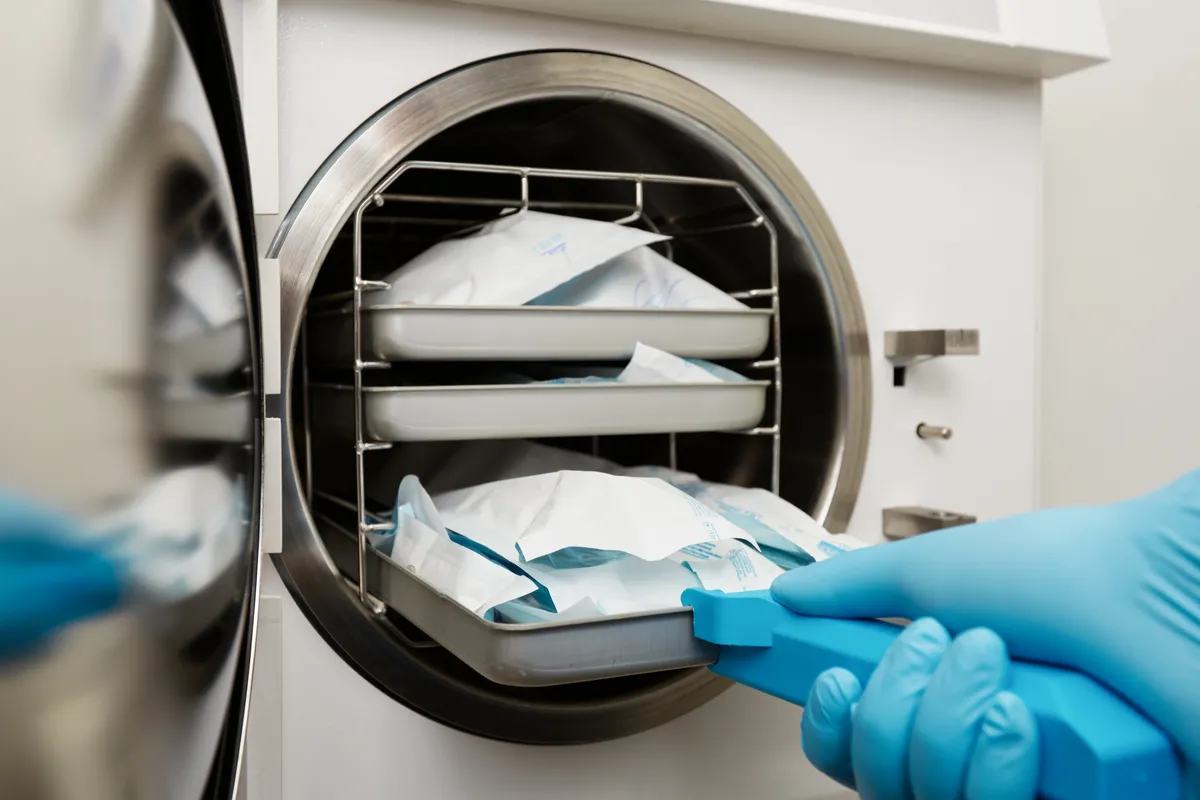
An approved sterilisation cycle shows that the equipment delivers the process. On its own, it does not show that the most difficult device to sterilise, in the most challenging load configuration, achieves the required level of assurance. Confusing "the cycle works" with "the product is safe" is one of the sector's quietest - and costliest - validation gaps.
Sterilisation means reducing the microbial load to a defined probabilistic level. The standard target for devices that come into contact with sterile tissue is a SAL (Sterility Assurance Level) of 10⁻⁶ - a probability of no more than one non-sterile item in a million. You never see this assurance in the product. You demonstrate it through validation. Sterilisation validation is, by definition, a special process under clause 7.5.6 of ISO 13485.
Start with bioburden, rather than the cycle
Validation does not start in the autoclave or ethylene oxide chamber. It starts with knowing what you are trying to kill. Bioburden - the product's microbial load before sterilisation - is the starting point. Without controlling and monitoring it, a sterilisation parameter is a guess dressed up as data. Uncontrolled bioburden invalidates the cycle's premise, however robust the cycle may appear.
The standard depends on the method - and the method depends on the product
There is no single "sterilisation standard". There is a standard for your method. Ethylene oxide follows ISO 11135. Radiation (gamma, electron beam and X-rays) follows ISO 11137. Moist heat/steam follows ISO 17665. Each defines how to establish and maintain the dose or cycle, how to qualify it and how to monitor it. Choosing the method is a design decision with regulatory consequences - material compatibility, residues and product sensitivity all have to be considered.
IQ, OQ, PQ: the backbone
Qualification follows the established logic. IQ (Installation Qualification) confirms that the equipment has been installed as specified. OQ (Operational Qualification) demonstrates that the process delivers the parameters at its limits - including operational worst cases. PQ (Performance Qualification) demonstrates, using the actual product and load, that a sterile outcome is achieved consistently. Skipping or weakening any stage creates a weak link that an audit will find.
The worst case is no detail: it is the heart of validation
Sterilisation validation stands or falls on the worst-case challenge: the device that is hardest to penetrate, the densest load configuration and the least favourable position in the chamber. If the worst case passes, the rest passes. Validating under easy conditions and producing under difficult ones is an illusion of compliance.
Sterilisation does not end where packaging begins
A perfect cycle on a product whose sterile barrier has not been validated alongside it delivers nothing to the patient. The sterilisation process and sterile barrier system must be validated together - including because sterilisation itself subjects the packaging to stress (heat, pressure, gas or radiation). That is why sterilisation, cleanrooms and packaging belong in the same strategy, rather than three parallel projects.
The most common strategic mistake
Treating sterilisation validation as an installation event - performed once and filed away forever. A change of raw material supplier, altered bioburden, a new load configuration or a packaging modification can each undermine the original validation premise. Without a revalidation strategy triggered by change and risk, the certificate on the wall ages - but the risk does not.
SAL is a probability. An audit is a demonstration. The patient experiences the consequence. All three need to point to the same data.
Is your sterilisation validation an installation document or a living system that responds to change?
At HSC Global, we support medical device manufacturers in their sterilisation validation strategy - from bioburden to SAL and from the worst case to revalidation - integrated with the sterile barrier and aligned with ISO 11135/11137/17665, QMSR, MDR and RDC 751.
Explore the Special Process Validation for Medical Devices course or speak to our team.
Let us discuss your sterilisation strategy.
#MedicalDevices #Sterilisation #ISO11135 #ISO11137 #ISO17665 #ProcessValidation #SterileBarrier #RegulatoryAffairs #QualityManagement #MedicalDevices #ANVISA #MDR #HSCGlobal
More quality to explore
Each article connects regulatory changes to what they mean for your day-to-day work.
 Quality
A special process is not audit jargon - it is the factory's most misunderstood risk category
If your process output cannot be verified by inspecting the finished product, you are dealing with a special process - where failure does not show up in the component, but in the patient.
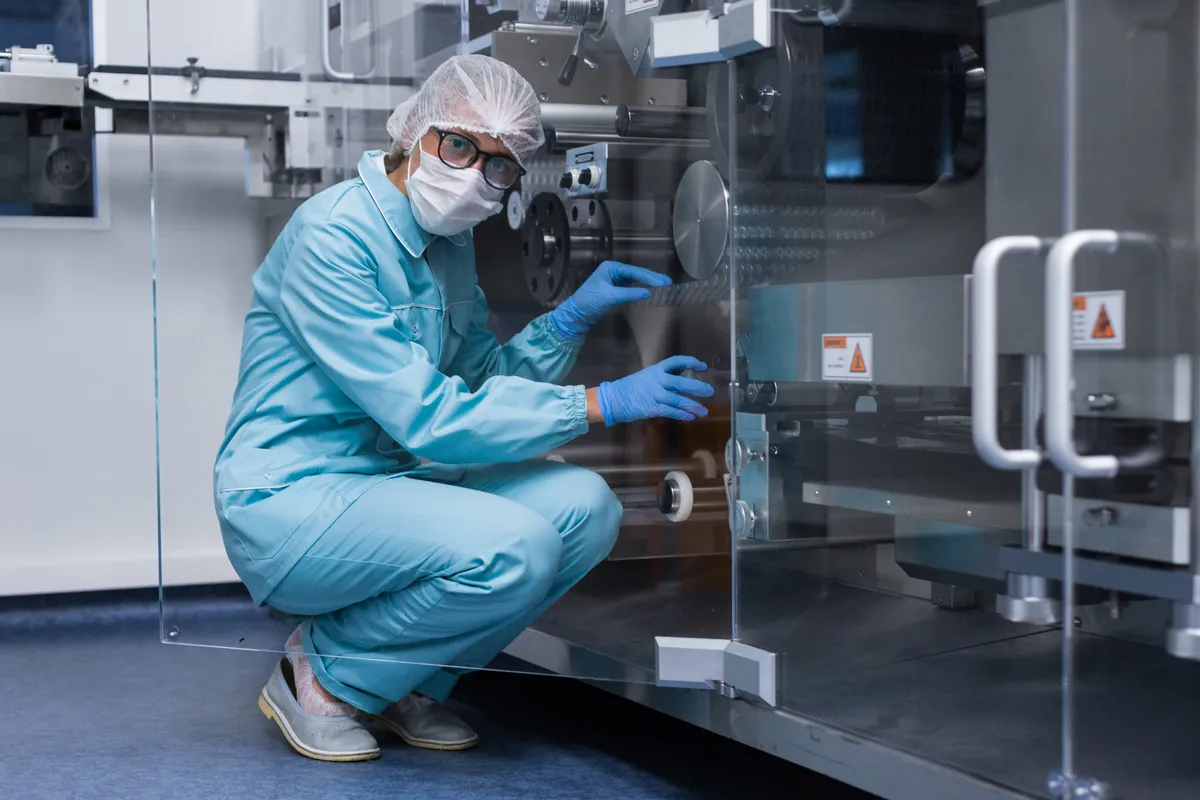 Quality
Packaging does more than protect the product. It maintains sterility - and that takes different engineering
Physically protecting a product and maintaining a sterile barrier throughout its shelf life are distinct objectives requiring distinct validations. Sterility only reaches the patient if the packaging preserves it.
 Quality
Four Regulatory Requirements, One Validation System (QMSR, MDR and RDC 751)
ISO 13485, FDA QMSR, MDR 745/2017 and RDC 751/2022: treating each framework as a separate project multiplies costs and weakens your case. The solution is one system interpreted through several regulatory frameworks.
Comments
No comments yet. Be the first to comment.